
Sharp County Criminal Docket Searches
A Sharp County criminal docket search starts at the official Search ARCourts service. Know a name? Use the participant route. Know a court number? Use the case route. Then narrow the results to the Sharp County court and location printed on the charging paper. Selection matters as much as spelling here, since Circuit Court felony records and District Court misdemeanor records do not share one local clerk.
The portal can display parties, the judge, filings, charges, dispositions, future events, judgments, and links to some public documents. Coverage runs uneven, though. Every Arkansas circuit court supplies statistical information, while only some district courts offer searchable case data. So a blank district search is a reason to call the right Sharp County District Court clerk, not proof that no criminal docket exists.
- Identify Circuit Court or the named District Court department from the case paper.
- Search by the full case number first; otherwise use the participant name fields.
- Confirm Sharp County, court level, filing year, and party role before opening a result.
- Read charges and dispositions by count, then inspect filings and future events separately.
- Ask the filing clerk for missing documents or a certified disposition.
Sharp County Criminal Docket Technology Shift
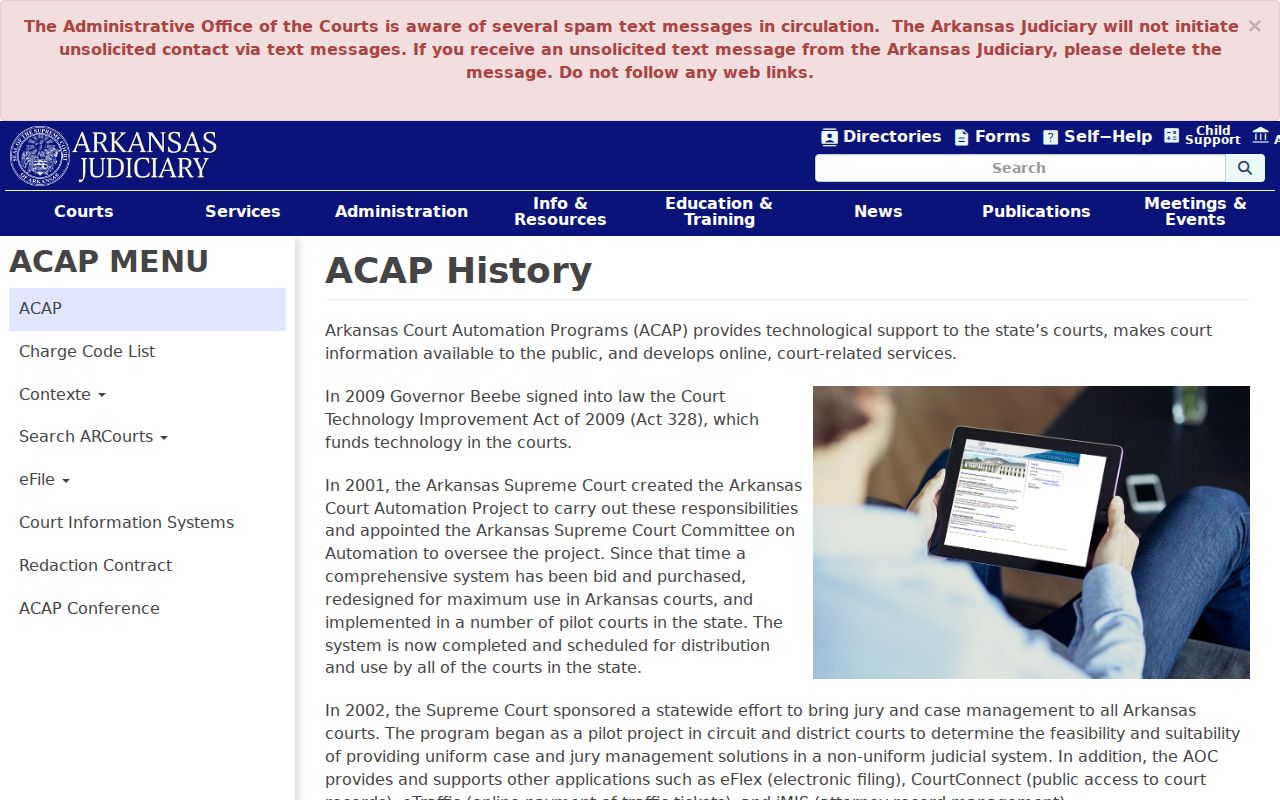
Uneven Sharp County criminal docket results often trace back to Arkansas court technology. The Arkansas Court Automation Programs history follows CourtConnect, Contexte, eFlex, and the newer Search ARCourts service. Search ARCourts is replacing Public CourtConnect. Contexte still feeds case data into the system. eFlex, by contrast, serves registered filers and court staff rather than the general public.
The official ACAP history places any Sharp County criminal court docket inside a long statewide shift. That shift runs from legacy tools toward newer search and case-management services.
This is why a portal result and the clerk's official record can differ. Older files may still live on paper. A new filing may await entry. A district department may also post less online detail than Circuit Court does. No official source gives a Sharp County imaging start date, so the clerk remains the safe fallback for older criminal dockets.
Criminal Dockets: What They Show
Think of a Sharp County criminal docket as an index and timeline. It is not the whole file. Read the header and court first. Next come the State and defendant roles, each charge, the dated filings, and the future-events block. One charge can be dismissed while another ends in a conviction. So a case-level status alone may hide the result that matters most.
| Case number | The court-assigned identifier, such as the portal's example 10CR-09-100; copy it exactly. |
|---|---|
| Charge | Alleged offense, statute or code, classification, and count details where public. |
| Filings | Dated instruments, motions, notices, orders, and sometimes public document links. |
| Future event | Upcoming date and event type, subject to later resets and court confirmation. |
| Disposition | Outcome for a count, with a date and terms such as guilty, dismissed, or nolle prosequi. |
| Sentence and costs | Publicly entered terms and amounts when the court supplies them. |
A charge stays an allegation until adjudication. A bond entry concerns release or security; it is not an outcome. Similarly, "nolle prosequi" means the prosecution formally chose not to proceed on that charge, subject to the governing law or order.
Sharp County Criminal Dockets Split Courts
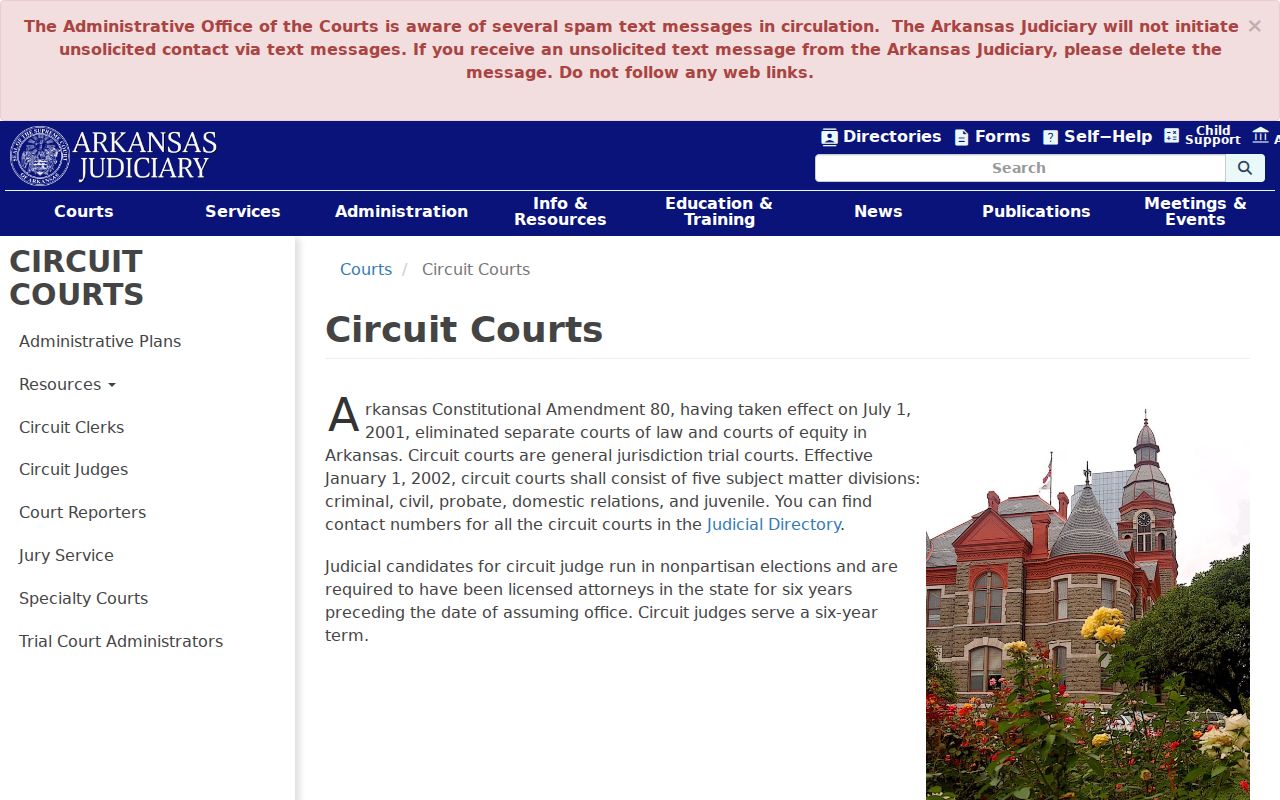
The Arkansas Judiciary's Circuit Court overview names Circuit Court as the state's general-jurisdiction trial court. In Sharp County, felony and other general-jurisdiction criminal files belong to Sharp County Circuit Court. The Sharp County Circuit Clerk holds them as well. District Court, working within limited jurisdiction, handles misdemeanors, traffic cases, and preliminary or lower criminal matters.
The official overview helps separate a Sharp County Circuit Court criminal docket. It also distinguishes a lower-court plea or trial docket.
Circuit Court business happens at the public counter, 718 Ash Flat Drive, Ash Flat. The current official directory lists Circuit Clerk Alisa Black at 870-994-7361. District matters go to the Ash Flat or Cherokee Village department named in the case. One caution applies. A request sent to the County Clerk reaches the wrong custodian. That office simply uses the same word "clerk."
Criminal Case Stages on the Docket
Sharp County criminal docket entries read better as a sequence. The charging instrument may be a complaint, information, or indictment, depending on procedure. From there, expect an initial appearance or arraignment, counsel and bond activity, discovery and motions, setting notices, a plea or trial, disposition, sentencing, and post-judgment or appeal activity.
Docket flow: Filing → Arraignment → Pretrial → Plea or Trial → Disposition → Sentencing.
Dates rarely move in a straight line. A continuance or reset displaces an older setting. Scan every later entry and the newest future event. If a date is close, confirm it with the filing court. For a broader date-finding path, the Sharp County court schedule separates recurring sessions from a case-specific order.
Note: A filing date, bond entry, or old plea docket date is not a confirmed next hearing.
Sharp County Criminal Docket Trial Days
Sharp County criminal dockets follow a set local schedule. The District Court plan puts Ash Flat traffic and criminal pleas on the first Thursday. That session starts at 9:00 a.m. Trials split by representation. Defended defendants appear on the third Wednesday at 9:00 a.m. Self-represented defendants come back the next day at the same hour. Cherokee Village holds traffic and criminal pleas and trials together. That calendar falls on the third Friday at 9:00 a.m. These sessions show how the lower court groups its work. They do not prove any case is still set. A signed order, a later docket reset, and the current clerk record control the calendar. Venue differs too. Ash Flat sessions convene at the Sharp County Courthouse. The Cherokee Village department sits at City Hall, 2 Santee Drive.
| Department | Published criminal docket | Custodian |
|---|---|---|
| Ash Flat | First-Thursday pleas; separate third-Wednesday and third-Thursday trials | Sharp County District Court Clerk |
| Cherokee Village | Third-Friday traffic and criminal pleas and trials | Cherokee Village department clerk |
| Circuit Court | Case-specific felony settings | Sharp County Circuit Clerk |
Sharp County Criminal Docket Courts
Check the court name at the top. That name points to the office holding the criminal docket. The Circuit Clerk keeps the record for the Third Judicial Circuit, Sharp County Circuit Court. The Ash Flat District Court department runs traffic and criminal pleas. It also keeps two trial calendars. Cherokee Village handles the pleas and trials routed there. If no online docket appears, use every channel the court supports. Call the right clerk. Use the official District Court directory or the Circuit Clerk directory. A visit to the counter works too, so bring the case number. Mail is another option. First confirm the charge and the payment method. Then send the case number, filing title and date, copy type, and return address. No official Sharp County source authorizes a general email route. Nor does one authorize a fax or drop-box route for these records.
Sharp County Criminal Docket Drug Court
The Third Circuit plan places Sharp Adult Drug Court inside the circuit. It is a voluntary, 18-month, pre-adjudication, multiphase program. Eligible Sharp County adults may qualify. Published criteria demand county residence and a high-risk, high-need assessment. A moderate-to-severe substance-use disorder is also required, along with limits tied to violent felonies and registration-triggering convictions. Entry means a guilty plea. A deferred sentence follows, with consent from the participant, prosecutor, defense counsel, and judge. Public activity usually stays under the underlying Sharp County criminal docket. Treatment and assessment details may stay confidential. The plan offers no separate public daily drug-court search. Use Search ARCourts for what the law permits, then contact the Circuit Clerk.
Keep the records distinct: a public case timeline may show court events while protected treatment material stays outside public view.
Sharp County Criminal Docket Missing Filings
A filing title with no document link does not mean the paper is gone. Search ARCourts links only some public filings. Write down the exact title and date. Then ask the proper clerk whether the document may be inspected or copied. The clerk can also say whether an older Sharp County criminal docket sits in a paper or archived file. Ask for certification expressly. A portal print or screen image is informational, not a clerk-authenticated criminal disposition. The court does not publish plain-copy, certification, exemplification, or search fees. Call before mailing any funds. Send case-specific content questions to the filing court. The AOC help numbers, 501-410-1900 option 1 and 866-823-5778, handle portal function.
Access Rules for Criminal Dockets
Arkansas Supreme Court Administrative Order 19 governs public access to court records. Its presumption of access has limits. Federal law, Arkansas statutes, court orders and rules, Social Security numbers, account and personal-identification data, sealed matters, and other protected information all carve out exceptions. Internet access can run narrower than the clerk counter. Administrative Order 19.1 covers redacted public versions and unredacted material filed under seal. The Arkansas Code holds the criminal-record sealing framework at section 16-90-1401 and following. Juvenile confidentiality sits at section 9-27-309. A “not found” result has many causes. It may reflect a wrong court, a search mismatch, entry lag, limited Contexte coverage, an older file, sealing, or another access restriction.
Access rule: A clerk cannot release a sealed Sharp County criminal docket merely because it was requested. Ask the proper court what motion or order is required if a legal right of access is claimed.
A public entry can exist while its document stays restricted. The reverse happens too. A record missing online may still sit at the clerk's office. Never infer hidden facts from a redaction. The same goes for a missing link. Ask the clerk to name the rule, statute, or order behind any denial.